Writing Iso Image For An Os To Usb Stick From Mac
If you are downloading Ubuntu, you can get it here: Step 2: Erase / Format / Initialise your USB Stick It’s time to pop your USB stick in your Mac. Regardless of whether you have a blank USB stick, or one with lots of files, you are going to need to completely erase the contents of it. It’s commonly known as ‘Formatting’, but those Cupertino Cliques like to call it ‘Initialise’ instead 🙂 To initialise your USB stick, go to your Applications menu.
1: DOS_FAT_32 NO NAME 8.0 GB disk1s1 It’s pretty clear from this output that /dev/disk1 is indeed my 8Gb Sandisk Cruzer USB drive. The easiest way to prepare a USB for burning is to erase it. This can be done using Disk Utility (I knew it was useful for something) by selecting your USB drive (not any of its partitions) in the left hand pane, clicking the Partition tab, and creating a 1 Partition layout, with the Format Free Space. See screenshot opposite.
The iso standard is short for ISO9660 and is a standard that defines the format of an image intended for burning to CD. Even after using hdutil to convert the image to UDRO (a UDIF Read-Only image) Disk Utility will still stubbornly refuse to help. Disk Destroyer Duplicator to the rescue Being Unix based, OSX has the command line dd utility available. Short for Disk Duplicator, dd is a block level reader/writer that makes raw copies from one file to another. But you want to copy the image to a device, right? That’s fine, because everything in the world of Unix/Linux is a file – even devices.
If you’re a Mac OS X user the time will come when your computer won’t boot or a problem may arise where you can’t take control of the device, and booting from an OS X installation media will be required. This is why it’s recommended that you make a Mac OS X bootable USB when your Mac is in working conditions. However, if you find yourself on a scenario where your device (iMac, MacBook Pro, Air, Mac Pro or Mini) is not responding and you happen to have a Windows PC, then you can still be able to easily make a USB bootable installation media for your Mac OS X to reinstall the operating system using the Recovery Assistant. Bear in mind that this will also work for Windows users, who are running Mac OS X on a virtual machine and need to upgrade to the latest version.
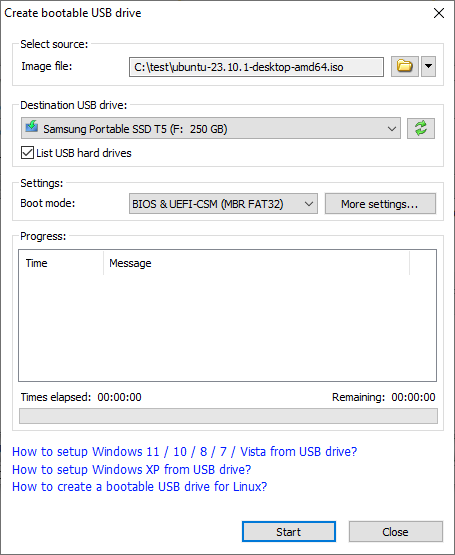
One more note: If you want to create a bootable USB stick to be used on a Mac/ OS X, do not forget to format the stick with Disk Utility to HFS+ with a GUID partition table. In case you want to create a bootable USB stick for OS X Mavericks / OS X Yosemite, there exists a shortcut command (note to change the target disk folder accordingly).
What are we trying to do here? So, just to be clear, you have downloaded Linux (say Ubuntu) from the Ubuntu website.
Be patient and let it do its thing. 10.In Terminal, type diskutil eject /dev/diskN and press the Enter key. Again N is the number we established in step 7. You are done recorded with screenflow Audio recorded with Zoom H1 Edited with Final Cut Pro X and Compressor --------------------------- Don't forget to follow me on twitter: @z4x0n Thanks for watching:).
If you are unable to boot your ChromeOS device using your new USB media, see, below. On ChromeOS or Linux (Traditional) • First, you need to download the GalliumOS iso for your Chromebook. • Once the iso is finished downloading (you MUST wait for it to finish), open up your favourite Terminal emulator.
Visit my blog entry - Instructions: 1.Download the.iso file. This also can be an.img file or a.dmg file 2.Rename the.iso file to.dmg. 3.Right-click on the.dmg file and select Get Info. Write down the full path name as mentioned in the dialog box.
Hdiutil convert -format UDRW -o destination_file.img source_file.iso You will notice that the destination_file.img from the command will create the file destination_file.img.dmg really. This is because the hdiutil program automatically adds the dmg file extension. This is not a problem as the file extension won’t affect the format of the image. Prepare the USB stick Check your USB stick and make a backup if there is any important data on it, as the next steps are going to delete everything on it.
I have used PIL a while ago to work with images. But it made me cry, before I have met sorl-thumbnails. It helped me a lot. But now I have to deal with PDF's.
Use python stdin/out to run external command line tool. It might work for you to. But it seemed not so pythonic for me. So I have searched fo better decision. My current is for now to install ImageMagick and MagicWand binding. Install ImageMagick.
Step 6: Finishing up It’s now time to eject the disk. We need to do this manually, to do so, enter the following command: diskutil eject /dev/diskX Replacing the X with the number you used earlier in this guide. It’s now safe to press the Ignore button on the window you saw in Step 5. You can now boot your computer (whether it’s your Mac, or another PC), using the newly created USB stick. To start it on your mac, reboot your mac, with the USB stick plugged in.
Please let us know if you run into this problem. The ISOs linked from the are well-tested, so try one of those instead. Testing your USB drive and write You can verify your image, as-written to USB or SD media. This is often different from the image saved to the ISO file, which always indicates a problem! The steps are a bit more complicated, and sometimes need to be repeated more than once to identify intermittently-failing USB/SD storage media: # Verify the ISO image, as-written to USB or SD media # # Replace 'galliumos.iso' with the path to your ISO file # Replace '/dev/sdb' with the device path of your USD or SD media. # (check with 'lsblk' and use the disk device only, not a partition device) # # Visit our support channel on IRC or Reddit for help with any of these steps! # ISO_SIZE='$(stat -c '%s' galliumos.iso)' ISO_MEDIA='/dev/sdb' sudo head -c '$ISO_SIZE' '$ISO_MEDIA' md5sum This should return an MD5 result which matches the published value, and also matches the results of the check of the ISO file itself (described above).
And ImageMagick seems like a complete decision to master it all. It has to convert pdf to my direct desirables - jpeg. So to install ImageMagick I have used brew. Like this: brew install imagemagick However, depending on a platform. But I strongly recommend to look at brew.
• Ensure the USB Key is properly formatted (Master Boot Record, FAT32 - if necessary NTFS using ) • You can try using the Restore feature in Disk Utility by clicking on the USB key's volume, then clicking on the Restore tab and choosing the ISO to restore onto it. • If step 2 fails, you can do this manually by running ditto or cp -r; eg. Ditto /Volumes/NAME_OF_MOUNTED_ISO /Volumes/NAME_OF_USB_KEY or cp -r /Volumes/NAME_OF_MOUNTED_ISO /Volumes/NAME_OF_USB_KEY to manually copy all the files (including hidden ones).
Debugging Bmike commented 'You can isolate the scanning of the image from the restoring to see if the problem lies with the image or the copy. Images -> Scan Image for Restore.
It is very important to not get this wrong, as it could cause catastrophic data loss. Once you've figured it out, make sure the USB flash drive is unmounted. • sudo umount -f /dev/sdb1 • Be sure to replace sdb1 with the actual partition name as listed in lsblk.
You can also use this tool to create IMG files from USB drives and SD cards. Linux users can use the dd command to directly write an IMG file’s contents to a removable media device. Insert the removable media and run the following command on Ubuntu: sudo dd if=/home/user/file.img of=/dev/sdX bs=1M Replace /home/user/file.img with the path to the IMG file on your file system and /dev/sdX with the path to your USB or SD card device. Be very careful to specify the correct disk path here — if you specify the path to your system drive instead, you’ll write the contents of the image to your operating system drive and corrupt it For DOS RELATED: If you need to boot into DOS to use a low-level firmware upgrade, BIOS update, or system tool that still requires DOS for some reason, you can use the tool to.
YUMI is easy to use. You scroll down the distribution list and check for the ISO you want, then select the corresponding ISO on your system from the box below.
(Actually it's part of django, but used out of the box in Admin UI) You can find views you need for this in there. They are: password_resetpassword_reset_done passwo.
Step 3: Identify the disk and unmount it Use diskutil to list the available disks Next up, open another inbuilt Utility on the Mac, this time it’s called Terminal. Launch that and you’ll get a blank text window. Use the ‘diskutil list’ command as per the above screenshot (click the image to see it clearer). Take a note of what device name your newly initialised USB disk is. You can see in my screenshot that /dev/disk0 is the Mac’s hard drive, disk1 is the USB stick in my case (note the name I gave it, UBUNTU). It is VERY important that you take note of the correct disk here.
• burned the ISO to USB at a reasonable speed and has the bonus of being able to mount ISOs before burning to check their files. What’s Your ISO-to-USB Tool of Choice? Hopefully, you now have a better overview of the best ISO to USB tools available to you. Furthermore, you can pick your tool based upon its raw speed, its functionality, or a combination of both. Got a load of USB flash drives and that you don’t know what to do with?
• NOTE: All data on the memory card will be overwritten and replaced by the image file data. • Once the process has started, it can take minutes to hours depending on the size of the image files, the speed of the memory card and compression used. • Be patient and wait for the process to complete. • Wait until the restore is complete before removing your memory card. • If all went well you should see: Backup Memory Card to IMG file • Start dd Utility from the Dash or your Applications menu. • NOTE: You can also Drag and Drop a Disk Volume on the dd Utility app icon to backup. • You will be asked to enter your password to start the process.
To install the OS of your choice, USB sticks provide you the easiest possibility. In fact, it can even work out cheaper than burning a CD or DVD that you just throw away once the version is outdated. For most Linux distributions the ISO for burning a CD/DVD is available freely on the internet. In this post I’ll assume you have already downloaded the bootable ISO image for the OS of your choice, but how to get the ISO image onto the USB stick?
• Click the folder button next to the empty box on Win32DiskImager. • Change the file type from Disk Images (.img) to *.*. • Select the GalliumOS iso by navigating through the files and folders on your filesystem. • Select the letter of your USB drive from the dropdown in Win32DiskImager. • Click the Write button on Win32DiskImager. • Confirm the write if prompted to overwrite or corrupt of physical device.
Don’t have the ISO? YUMI will take care of that for you.
Go to and get it from there. No adware and all the adware choice are automatically not chosen for the install. And you can save the download file and run it once a month or as often as you like to make sure the programs you choose are up to date. (it downloads, installs/updates the programs that you choose) You can remove AdWare from Advanced Installation radio button while Installing. I just installed ImgBurn and before it even got to the advanced installation, my AV blocked a setup program it tried to spawn with more AdWare.
Bytes transferred in 87.990409 secs (11726264 bytes/sec) Note: We changed the device /dev/disk1 to /dev/rdisk1 – this is because in OSX each storage device has two references to it. Disk[n] which is a block level, buffered device, and rdisk[n] which is the raw device – copying to the rdisk reference is about 20 times faster. Entering the sudo command will require your admin password (due to the sudo – Super User do command). It will then take some time to copy your data and you won’t get any feedback from the terminal. As you can see, my 1Gb iso took about 90 seconds to copy. That’s it – you should now be able to eject your USB drive and boot up the PC.
No need to format the card. • Next select the Backup folder location. • Enter the filename and folder of your backup. You do not need to specify a path or extension for the file. • You then have the option to select to compress the backup on the fly. This option will take a bit longer to complete, but the file size will be greatly reduced. • Next confirm the backup settings and click Start.
How to create a GPT partition on a USB flash drive If the USB flash drive is not working using TransMac, it could be still a partition problem. In this case, you want to redo the entire process again, but this time use the following steps to use the Diskpart command-line utility on Windows to create the appropriate GPT partition. • Open Command Prompt as an administrator. • Type the diskpart command and press Enter. • Enter the list disk command to view all drives connected to your computer and press Enter. • Type the select disk command followed the number assigned for the USB flash drive (e.g., select disk 4), and press Enter.
But I've needed a more complex decision. And the idea was that own bicycle is always better. So I've thought of django admin and that it has all the things you need to do this yourself in no time. (Actually it's part of django, but used out of the box in Admin UI) You can find views you need for this in there.
Adobe flash player for mac blocked. Have Mac OSX 10.7.5, Safari 6.0.2. By clicking on 'blocked plug-in' latest version of Adobe Flash Player is downloaded. I then followed installation instructions and get an indication that installation is complete. After that, when opening the Flash Player, the same message 'blocked plug-in' appears. To continue viewing Flash content, update to a later version of Adobe Flash Player: Click the Download Flash button. Safari opens the Adobe Flash Player page on the Adobe website. Follow the instructions on the Adobe website to download and install the latest version of the plug-in.
If you don’t have one, you can — you’ll need a legitimate product key to use them, though. Provide the ISO file and a USB flash drive and the tool will create a bootable drive. RELATED: Alternatively, if you’re installing Windows 10, you can download an ISO or burn Windows 10 installation media directly using. From a Linux ISO RELATED: There are many tools that can do this job for you, but we recommend a free program called —it’s faster and more reliable than many of the other tools you’ll see recommended, including UNetbootin. Download the Linux distribution you want to use in.ISO form. Run the tool, select your desired distribution, browse to your downloaded ISO file, and choose the USB drive you want to use.
But you want to copy the image to a device, right? That’s fine, because everything in the world of Unix/Linux is a file – even devices. Informally referred to as Disk Destroyer, should you tell dd to output to the wrong device then your day is definitely going to be spoiled, so to avoid any mishaps we will make sure we know which devices on your system is your USB stick. You can determine this from the command line. 1: DOS_FAT_32 NO NAME 8.0 GB disk1s1 It’s pretty clear from this output that /dev/disk1 is indeed my 8Gb Sandisk Cruzer USB drive.
Advertisement Installations from a USB flash drive have become one of the easiest ways to update your computer with a new operating system. A USB installation is quick, extremely portable, and has the bonus of reverting to a storage device following the install. You’ll find a fair few ISO to USB tools out there, and they feature a range of tools for beginners and advanced users.
• Next confirm the backup settings and click Start. • Once the process has started, it can take minutes to hours depending on the size of the image files, the speed of the memory card and compression used. • Be patient and wait for the process to complete. • If all went well you should see: Download.
Verify the Downloaded Image Verify that the download succeeded by verifying the hash of the image file. The download site will likely have a file with sha256 or md5 in the filename. Many times this is in the same HTTP or FTP directory from which the original image was retrieved. The hash of the downloaded file may be calculated and that value compared against the hash that the project specified. Hash calculation programs vary by operating system, some common examples include: • Windows: The application.
Everyone, The following utility worked for me just fine: Universal-USB-Installer-1.8.3.7 I downloaded it from: www.pendrivelinux.com Then I downloaded a Linux.ISO image, created the USB bootable drive with the above utility, with the.ISO image, and then tested it. I can run Ubuntu Unix from a bootable USB containing the OS on it. I like windows, specially Windows 7, but security issues, and professional needs, well I am exploring Linux as an alternative, rather than just go Apple, which they tell me is unhackable. Regards, Jean-Pierre. Hi, You will need a usb stick that is the same size as install disc (ie. Your.iso file.